Science of Blogging video pussy wet pissing
Science, meet World
Science, meet World
Jul 28th

Jonathan Eisen, PhD
Today we have another post in our Get To Know a Scienceblogger series.
Jonathan Eisen is a professor at the Genome Center at the University of California (UC), Davis and holds appointments in the Department of Evolution and Ecology in the College of Biological Sciences and Medical Microbiology and Immunology in the School of Medicine. In addition to his research, Dr. Eisen is also a vocal advocate for “open access” to scientific publications and is the Academic Editor-in-Chief of PLoS Biology. He is also an active and award-winning blogger/microblogger at The Tree of Life and on Twitter. You can learn more about him here. The info in this biography and the picture at left have been taken from Jonathan’s blog, which uses a Creative Commons Attribution License.
What is the topic of your blog?
Many threads woven together
Open science and open access to scientific literature
Microbiology and microbial diversity
Genomics and evolution
What was your primary reason for starting a blog?
Sharing with others fun things I was doing — got sick of sending out lots of email messages and wanted a better way to share …
How often do you post, and roughly how much time goes into each post?
Varies - no system. I post when I have time and have something interesting to post about. Maybe 2-3 x / week. Some posts take five minutes some take 4 hours …
How do you fit in time for social networking?
I view it as a fundamental part of my job as a scientist and an educator. I use social networking to follow the literature, to do outreach, to communicate with colleagues, etc.
Have there been any benefits to blogging, either personally or professionally?
Lots. See http://phylogenomics.
Have there been any downsides to blogging, either personally or professionally?
#1 issue is when I write something that is too obnoxious and regret it later. I have done this maybe 3-4 times and have learned to try and write about ideas without criticizing individual people too much.
What piece of advice would you give other scientists in your situation who are considering moving into social media?
Don’t be afraid. Spend as much time or as little time as you want on this. These systems are tools, no more or no less. You decided how to use them just like you decide how to use a microscope. But like a microscope they can be really useful - so consider experimenting with them.
What have been the most effective ways of promoting your blog?
Twitter …
Were you surprised by anything blog related, either good or bad?
Not really … it’s all pretty straightforward. Main surprise I guess is how many people read my blog …
Any other information that you think people would find useful?
Blogs, twitter, facebook, etc are all just computer programs. They are neither good nor bad. They can be used well or poorly.
—
Thanks Jonathan!
May 19th

Dirk Hanson - Addiction Inbox
Today we have another post in our Get To Know A Scienceblogger Series.
Dirk Hanson is a freelance science writer and business journalist with more than 30 years of professional experience. He has written for numerous magazines and trade publications, and is the author of three books including The Chemical Carousel which received an Independent Publisher Book Award in the Health/Medicine/Nutrition Category. His current area of coverage is the neuroscience of drug addiction. Dirk currently maintains a popular blog on drugs and the science of substance abuse called Addiction Inbox, serves as senior contributing editor for the new health web site The Fix, and has contributed phenomenal articles at BrainBlogger. You can learn more about Dirk and his books at www.dirkhanson.org.
What is the topic of your blog?
Addiction Inbox covers articles and health studies about drugs, addiction, and alcoholism, with an emphasis on the most recent scientific and medical findings. And anything else I find interesting related to drugs and the brain.
What was your primary reason for starting a blog?
I kind of jumped and got pushed simultaneously. I was finishing a book about scientific research on drug and alcohol addiction. Print outlets were in disarray, authors and editors were clueless, and I wanted an online platform from which to continue the conversation and to serve as a point of contact for the book. But the blog grew slowly and steadily and took on a life of its own. I’ve been an online journalist ever since.
How often do you post, and roughly how much time goes into each post?
I’ve gone slightly against the grain on this one. My posts are longer and less frequent that many bloggers—although this is a tendency throughout the science blogging community. I sometimes put up 1,200 word posts or longer. I try to put up something new every 3-4 days—which, from the old-school blogging perspective, is an eternity, not to mention a slow and painful death. Happily, I found out that a sort of bastard hybrid—call it long-form blogging—works for me, and allows for more in-depth posts, which I like. How long does it take to write a good blog post? From about 20 minutes to maybe three days.
How do you fit in time for social networking?
I think at least some of it comes out of time that was previously eaten up by the telephone and television. And in my case, since I earn part of my living online, I just make sure to make time for it. I admit I never expected to be drawn into the world of Facebook and Twitter through my blogging activities, but that is, in fact, what has happened. As a journalist doing the bulk of my nonfiction writing on the net these days, I’m pretty deeply involved with those two media at the professional level on a daily basis.
Have there been any benefits to blogging, either personally or professionally? More >
Apr 28th
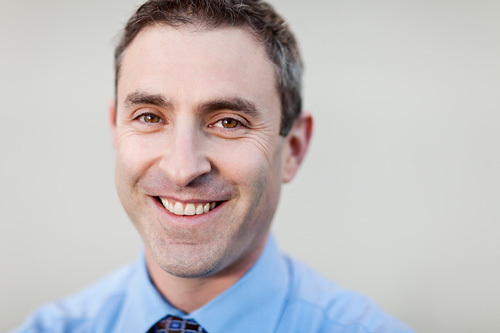
Dr Yoni Freedhoff - Weighty Matters
Today we have another interview in our Get To Know A ScienceBlogger Series. Today’s interview is with Dr Yoni Freedhoff, a family physician and founder of Ottawa’s Bariatric Medical Institute (a “multi-disciplinary, ethical, evidence-based nutrition and weight management centre”). His blog Weighty Matters is extremely influential in the area of weight management and policy (especially here in Canada) and has inspired many other obesity researchers and practitioners to enter social media, including Peter and myself. Enjoy the interview!
To learn more about Yoni please check out Weighty Matters or connect with him on Twitter.
What is the general subject of your blog? What is a “typical” post for you, both in terms of length and in terms of the topic.
Exposing what I see as truths behind nutrition, weight management, health policy and advertising. My typical post finds a study, a policy or an advertisement that’s trying to pull a fast one and calls it out. Length wise, I’d guess an average would be 400 words.
What was your primary reason for starting a blog?
I’ve been blogging for a relatively long time. Started out in 2005 and did so because a friend of mine who’s a PR expert told me I should. I think it was his nice way of asking me to shut up. I think he told me something along the lines of , “you seem to have a lot to say, why don’t you start a blog?”.
How often do you post, and roughly how much time goes into each post?
I post 6 days a week. Time really varies. I’d say most posts take 10 minutes. The more detailed posts can take hours.
How do you fit in time for the blog?
I’m not sure. I write quickly, so that doesn’t hurt. Sometimes, if I know it’s going to be a very busy few weeks, I’ll tee up the two weeks posts in their entirety before the busy time hits.
Have there been any benefits to blogging, either personally or professionally?
Apr 20th

Kevin Zelnio - Deep Sea News
Today we have another interview in our Get To Know A ScienceBlogger Series! Today’s interview is with Kevin Zelnio. Kevin is a marine biologist and writer. He has studied the ecology and evolution of animals living around underwater volcanoes and described several new species of anemone and shrimp. Kevin is the assistant editor for Deep Sea News, where he contributes articles on marine science. He is now a freelance writer and independent scientist and consultant living in beautiful coastal North Carolina. Outside of science, Kevin is a songwriter and enjoys spending time with family in the long-leaf Carolina pines!
To learn more about Kevin view his CV, send him an email and follow him twitter!
What is the general subject of your blog? What is a “typical” post for you, both in terms of length and in terms of the topic.
Deep Sea News covers the Earth’s largest environment! I serve as the assistant editor there. While we traditionally covered news, research and basic facts of the deep-sea, we’ve branched out in the last couple years to really encompass the whole ocean. Guess the deep-sea wasn’t big enough for us. We cover everything from conservation issues to new tech, nautical history and collect commentary and posts from our colleagues to add new voices to marine science blogosphere. The latter is the is part of a new initiative of ours called the Scientist in Residence. Each month highlights a new voice who ideally writes a post per week about their research area. We’ve had an algal oceanographer and a theoretical marine ecologist. Next up is another marine ecologist and sea tech! More variety is on the way too. Typical posts do not exist and vary widely from a quote and link to something of interest to long drawn out researched article.
What was your primary reason for starting/joining your blog?
Craig McClain started Deep Sea News in 2004 at blogger to collect news and new research in one place. As founder, Craig serves as chief editors and DSN is his baby. He has nurtured it through thick and thin into a marine science powerhouse. I joined in 2007. I was a graduate student in a deep-sea lab at the time and started regularly commenting on the blog. He invited me to start a guest post column on the blog - From the Desk of Zelnio - which I enjoyed. Inspired, I went off to found The Other 95% after that and made it very successful pretty quickly. About 6 months after that Craig asked me to come onto DSN permanently with him and Peter Etnoyer. I had been blogging for about 8 months then (which is like 8 years in blog years) and had settled into a voice and rhythm that seemed to resonate with people and provided enjoyment for me.
I think in hindsight, I really took to blogging quickly because I have a lot of passion and enthusiasm for science and the work I do. I needed an outlet. I am a naturally outgoing and social person and need to talk about stuff and share new things I find out! For my personality types, blogging is a natural fit. I recognized that this was an effective outreach tool too. Deep Sea News was pretty established, they got in early in the science blogging game and had a built in audience for me so I could reach people immediately and they appreciated getting their science served ‘salty’.
Apr 14th
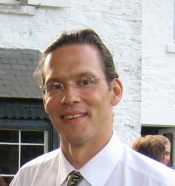
Dr Daniel Lende - Neuroanthropology
This post is part of our series profiling individuals who have successfully used social media as a platform for science communication. These individuals cover a broad range of academic disciplines, and we hope that they will be a useful source of info and motivation for others who are considering moving into social media, or for those who are already online but simply looking for some new ideas.
Today we interview with Dr Daniel Lende of Neuroanthropology. Daniel is Associate Professor in Anthropology at the University of South Florida. He trained in medical, psychological, and biological anthropology and public health at Emory University. His main research interests are substance use and abuse, the intersection of anthropology and neuroscience, behavioral health, community-based research, and public and applied anthropology. He has done fieldwork in both Colombia and the United States. You can reach him at daniel . lende @ gmail . com, or follow him on twitter at daniel_lende (bio from PLoS Blogs).
What is the general subject of your blog? What is a “typical” post for you, both in terms of length and in terms of the topic.
Neuroanthropology covers the intersection of anthropology and neuroscience, with an additional focus on developments in the sciences of the mind and in important news and controversies within anthropology. We generally write three types of post, shorter post that focus more on “news” and might be 500-750 words, a medium post from 800-2000 words (including our weekly round ups), and a long post, which goes from 2000 words and well on up.
Apr 12th

Dr Patrice Brassard of Le Physiologiste
Do you ever wonder how people get into online science communication? I certainly hope so, because over the coming weeks Peter and I will be introducing a new series interviewing science communicators about their experiences promoting science using social media. These individuals cover a broad range of academic disciplines, and we hope that they will be a useful source of info and motivation for others who are considering moving into social media, or for those who are already online but simply looking for some new ideas. If you would like to share your own experiences communicating science through social media feel free to do so in the comments, or to introduce yourself to us via Twitter or email (saunders [dot] travis [at] gmail [dot] com).
Our first interview comes from Dr Patrice Brassard, an assistant professor of Kinesiology at Université Laval in Quebec city, Canada. His main research interests are the integration of cardiopulmonary and cerebrovascular physiology in patients with diabetes at rest and during exercise, and the impact of mental work on the cardiovascular system in healthy subjects. His blog is titled Le Physiologiste and for the past two weeks he has also been guest-posting at the blog network Scientopia.
1. What is the general subject of your blog?
Initially, the general subject of Le Physiologiste was supposed to be…physiology :-). However, I started by sharing my experiences as a junior faculty member. It is important to mention that when I began to read science blogs, I was very interested in these kinds of posts from bloggers sharing similar research and teaching issues than mine. The other collaborators at Le Physiologiste are graduate students and are sharing their experiences as well (in English and French). A couple of weeks ago, we finally decided to include posts where we are actually discussing physiology, mostly in French.
I would like this blog to become a place for graduate students, researchers and professors in physiology to debate about hot physiology topics.
2. What was your primary reason for starting a blog?
The primary reason for starting my blog was that, to my knowledge, there are no valuable French blogs/websites discussing published literature in integrative/exercise physiology…however, I soon noticed that it would be easier to start blogging in English, because I was already exchanging with bloggers in that language.
I still have that goal of discussing and debating physiology research in French…Our blog remains a work in progress for the moment!
3. How often do you post, and roughly how much time goes into each post?